
Bürkert
Bürkert Solenoid Valves
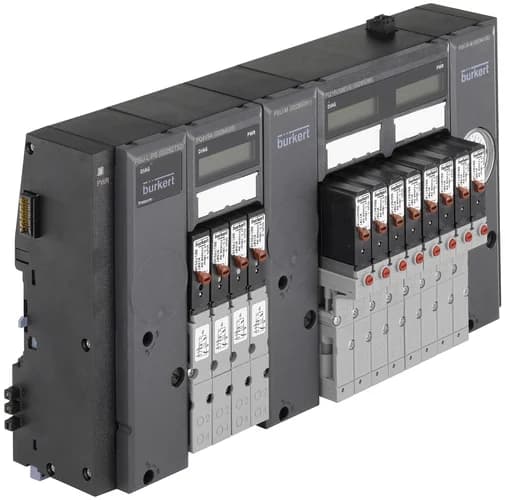
Bürkert direct-acting, servo-assisted and pilot-operated solenoid valves and valve islands, quoted by type number or by duty.
Need Bürkert Solenoid Valves?
Send a part number or nameplate photo. We respond within one business day.
Request a QuoteSolenoid valves are the highest-turnover fluid control item in most plants, and they fail on the coil or the seat rather than the body. A coil that has cooked from continuous duty and a seat that has hardened on aggressive media look identical from outside: the valve simply stops shifting.
We source Bürkert solenoid valves and valve islands across direct-acting, servo-assisted and pilot-operated types, in the body, seal and voltage combinations the duty requires.
Send the Bürkert type number, or the medium, line size, operating pressure, and coil voltage. Where a type is superseded we will identify the current equivalent rather than quote a discontinued number.
Applications
- Pneumatic and fluid control circuits
- Valve island and manifold systems
- Aggressive and hygienic media
- Coil and seat replacement
Bürkert Solenoid Valves: Common Questions
Usually. Send the type number plus the duty, medium, line size, pressure and coil voltage, and we will identify the current equivalent. This comes up often on machines more than a decade old.
Direct-acting valves shift at zero differential pressure. Servo-assisted types need a minimum differential to operate and behave erratically below it, which matters more often than people expect.
Both present the same way from outside. A coil cooked by continuous duty and a seat hardened by aggressive media are indistinguishable until you open it, and both are cheaper to hold on the shelf than to diagnose under pressure.
It follows the medium and the cleaning regime, not just the process fluid. EPDM handles steam and caustic and dislikes oils; FKM is the opposite. Tell us both the process fluid and the CIP chemistry.