
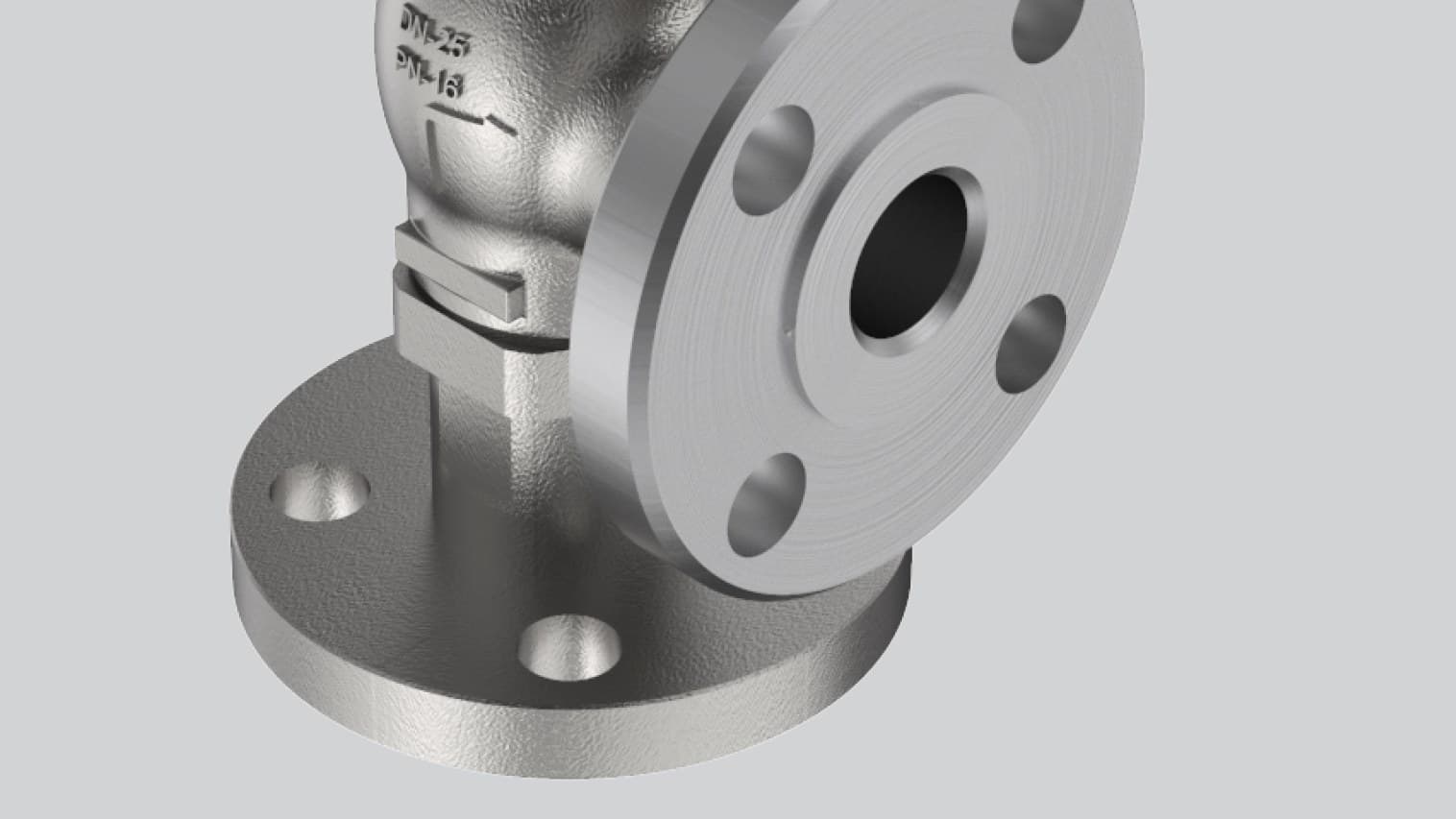
A safety relief valve is the last mechanical protection on a pressurized system. Everything else can be adjusted, bypassed or overridden. The relief valve is the component that has to work when the rest of the control scheme has already failed.
- 0.2-100 barg set pressure range, TOSACA 14001
- +/-3% set pressure tolerance1
- 10% overpressure to full capacity1
Those are real numbers off a real data sheet: TOSACA's Model 1400 covers set pressures from 0.2 barg, or 2 barg with bellows, up to 100 barg, holds set pressure to plus or minus 3%, and reaches full rated capacity within 10% overpressure. It is certified under the European Pressure Equipment Directive with material certification to EN 10204 3.1.
What Actually Determines the Valve
Not line size. Line size is an output of the calculation, not an input. What determines the valve is the set pressure, the relieving capacity required for the worst credible scenario, the medium and its temperature, and the code the vessel is inspected against.
Set pressure is normally at or below the vessel's maximum allowable working pressure, and the valve must pass the full required flow within a defined overpressure, commonly ten percent. Undersize it and the vessel overpressures while the valve is wide open.
Conventional, Balanced or Pilot-Operated
A conventional spring-loaded valve is the default and works well when discharge is to atmosphere or backpressure is low and steady. Built-up or superimposed backpressure acts on the disc and shifts the effective set pressure.
A bellows-balanced valve isolates the disc from backpressure, which is why it appears wherever discharge headers are shared. Pilot-operated valves suit high capacity and set pressures close to operating pressure.
Materials and Certification Are Not Details
Body material follows the medium and temperature: nodular iron and carbon steel for general service, low-temperature carbon steel and stainless for cold or corrosive duty, and exotic alloys where chemistry demands. Seat construction, whether metal-to-metal, Stellite or a soft seat in Viton or PTFE, follows the tightness requirement and the medium.
Oxygen service adds a cleaning and degreasing requirement that is not optional. Certification, whether ASME, PED or both, has to match what your inspector expects, and material certification to EN 10204 3.1 is commonly required.
Overhaul, Not Replacement
Relief valves are tested, reset and overhauled on a schedule rather than replaced. What comes out is the soft seats, gaskets and bellows, occasionally the spring if set pressure has changed. Manufacturers identify recommended spare parts per model, which makes a shutdown kit straightforward once the model and material are known.
Send us the valve model, size, set pressure and body material, or a photograph of the nameplate, and we will quote the spares. If you are specifying a new valve, send the set pressure, required capacity, medium, temperature and the certification you need.