
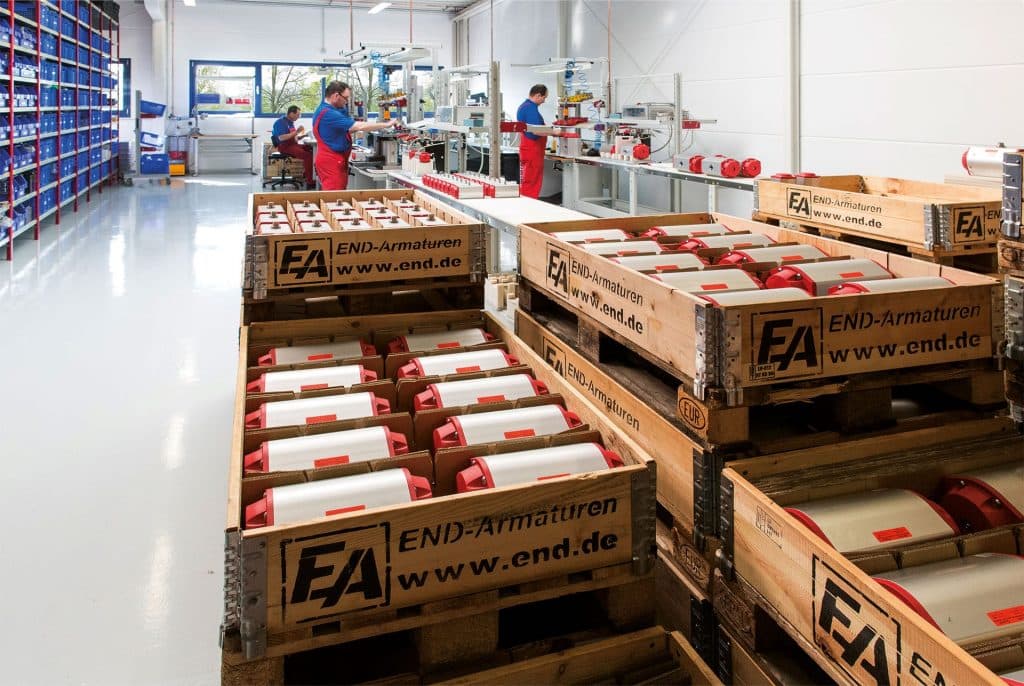
A brewery is an unusually hostile environment for machinery. It is wet, it swings between hot and cold, it is washed down with caustic and acid, and it runs continuously through a busy season. The equipment that survives is the equipment that gets attention on a schedule.
- 9,578 operating U.S. craft breweries, 20251
- -2.9% net change on 20241
- 21.86M barrels produced, down 5.1%1
The context matters for maintenance budgets. The Brewers Association counted 9,578 operating U.S. craft breweries in 2025, a 2.9% net decline and the second consecutive year of contraction, with production down 5.1% to 21.86 million barrels. In a contracting market, unplanned downtime is harder to absorb and deferred maintenance is more tempting, which is a bad combination.
Valve Seals Fail First, and They Fail Predictably
The elastomer seals in butterfly and ball valves take the worst of it. They see hot wort, then caustic clean-in-place, then acid, then steam, in cycles. EPDM handles steam and caustic well and hates fats and oils; other elastomers make the opposite trade.
The failure is rarely dramatic. A seat seal hardens, the valve passes slightly, and either a tank does not hold or a CIP circuit stops isolating properly. Both problems present as process faults long before anyone suspects a valve.
Rebuild kits are cheap relative to the beer. Keeping a set for each valve size on the shelf converts a production stoppage into a twenty-minute job.
The Rest of the Wear List
- Pump mechanical seals, particularly on transfer pumps that occasionally run dry
- Gaskets at every clamp connection, which harden and then weep
- Actuator air lines and solenoid valves, which corrode in a washdown environment
- Heat exchanger plates and their gaskets, where fouling shows up as a cooling problem
- Pressure relief and vacuum relief on tanks, which is a safety item rather than a process one
Two Habits Worth More than the Rest
First, verify CIP rather than assume it. Flow, temperature and concentration all have to be right, and a circuit that is not achieving flow is cleaning nothing while consuming chemicals and time.
Second, keep a spares list per vessel rather than per store. Knowing that a specific tank has four valves of a particular size and seal material turns a rebuild into an order rather than an investigation.
Send us the valve figure numbers, sizes and seal material and we will quote the rebuild kits. If you only have a photograph of the valve body, that is usually enough to identify it.